

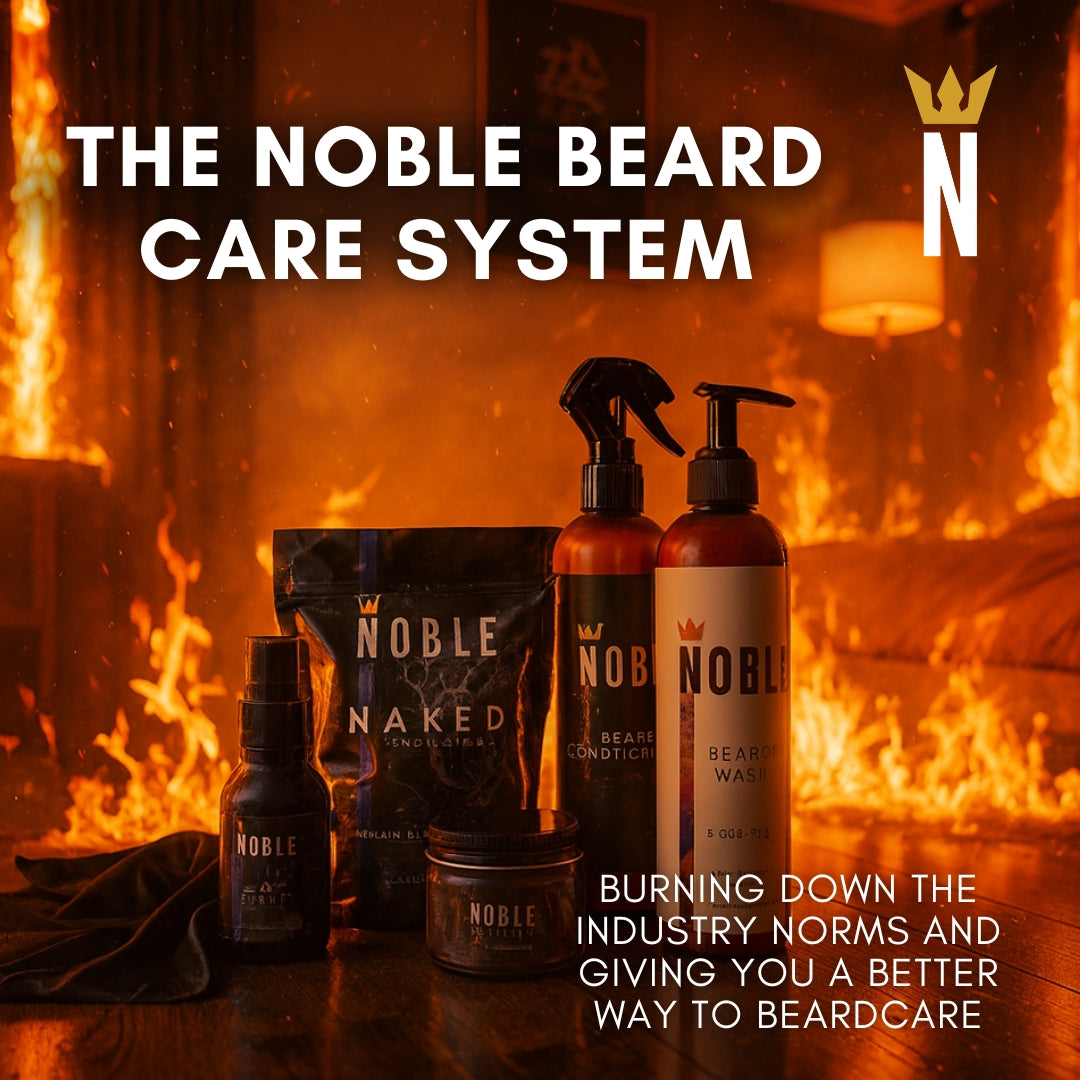
Noble Beard Care System: A Skin-First Beard Routine
Quick answer: A skin-first beard routine has four steps in this order: wash, condition, butter, then oil. Cleansing clears buildup, conditioner restores moisture, butter builds softness and control, and oil seals it all in. Skipping steps or reversing the order is why most beards feel dry or unruly.
Why most beard routines fall short
If your beard feels itchy, looks dull, or won't cooperate, it's usually the routine, not your genetics. Most men skip steps, use the wrong products, or apply them in the wrong order — and the result is dry skin, rough texture, and poor shape.
The fix is to treat your beard as what it actually is: hair growing from skin that needs care first. Clean, condition, build, seal.
The correct beard care order
Wash, then conditioner, then butter, then oil. Each step does a job the others can't:
- Wash removes buildup without stripping the skin.
- Conditioner restores moisture and improves manageability.
- Butter builds softness and natural control.
- Oil seals hydration and refines the finish.
Reverse the order and results drop — oil applied first, for example, blocks everything that should come after it.
Step 1: Gentle beard wash
Many beard washes are too harsh and strip the skin, which causes more dryness and itch. A gentle, sulfate-free cleanser (Noble's uses black seed oil) removes buildup while protecting the skin barrier. Most beards do well washed three to five times a week.
Step 2: Silk beard conditioner
This is the step that changes how your beard feels. Noble's Silk Beard Conditioner, made with hydrolyzed silk protein, smooths the cuticle, reduces friction, and makes the beard easier to comb and style. Oil alone can't fix dryness if the beard hasn't been conditioned first. Safe for daily use.
Step 3: Compound butter
This is where the beard transforms. A well-built butter melts in, delivering deep nourishment with soft, natural control — not stiff, not greasy. You'll notice a fuller-feeling beard with better shape and lasting softness.
Step 4: Lightweight beard oil
Oil is the finishing step, not the foundation. Used last, it locks in hydration, adds smoothness, and gives a clean, natural sheen. Used first, it limits everything that follows.
Adjusting the routine to your beard
- Short beards can often stick to wash, condition, and oil.
- Medium beards benefit from adding butter for control and structure.
- Long or coarse beards perform best with the full system every time.
- Dry skin calls for consistent conditioning, layered butter, and a light oil finish.
Results timeline
Within a few days, most men notice less tightness and more comfort. By the second week, detangling gets easier and shape starts to hold. After several weeks, the beard stays consistently soft and easier to manage.
Frequently asked questions
Do I need beard oil every day?
A small amount daily helps maintain a clean finish and seal in hydration.
Why is my beard still dry after using oil?
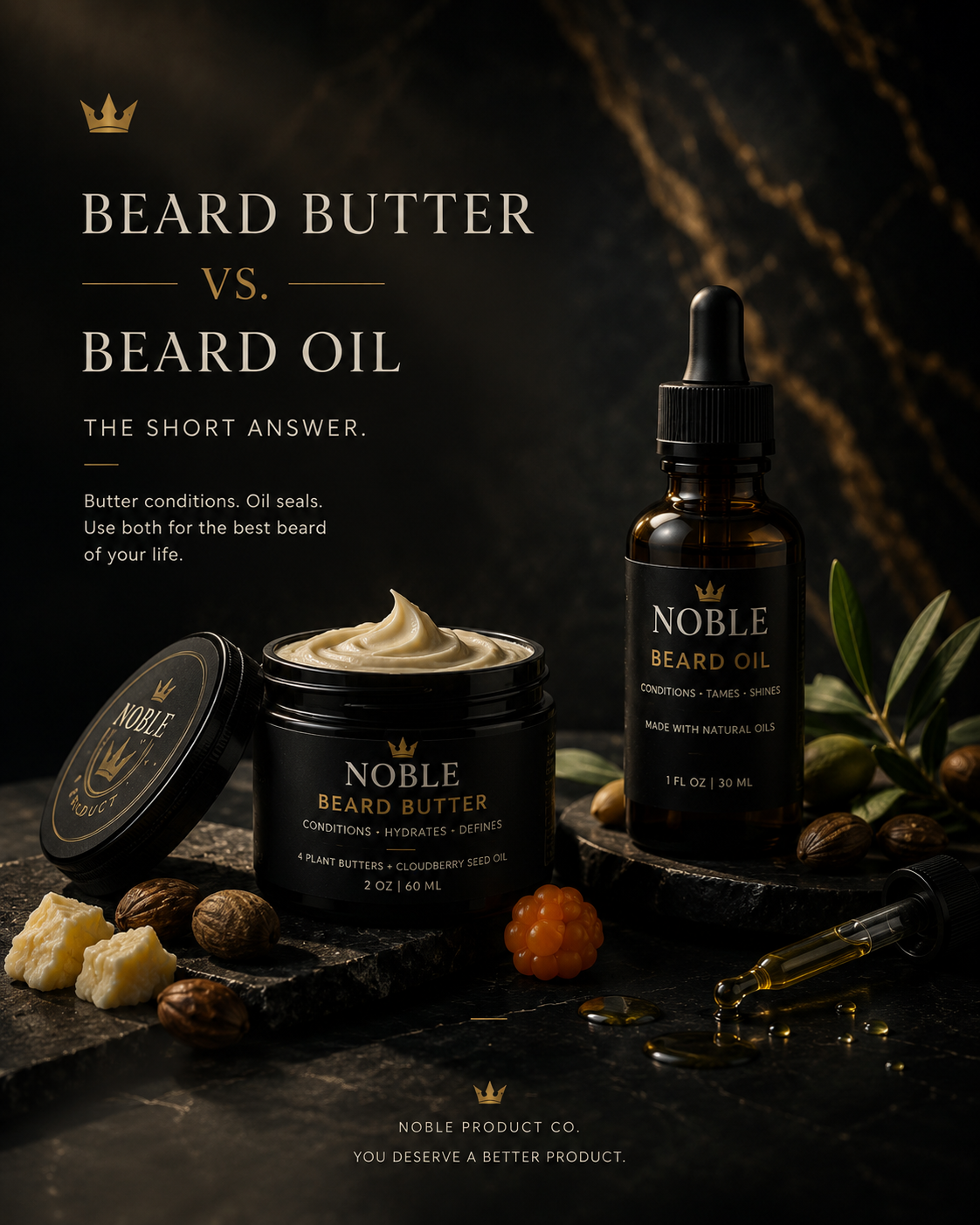
Oil seals moisture but doesn't provide it. You need to condition first.
Can I skip beard butter?
You can, but you'll lose softness, structure, and control.
How do I reduce beard itch?
Focus on the skin: gentle washing, consistent conditioning, and proper layering.
Is this routine good for sensitive skin?
Yes — it's built to support the skin barrier and reduce irritation.

Leave a comment
This site is protected by hCaptcha and the hCaptcha Privacy Policy and Terms of Service apply.