

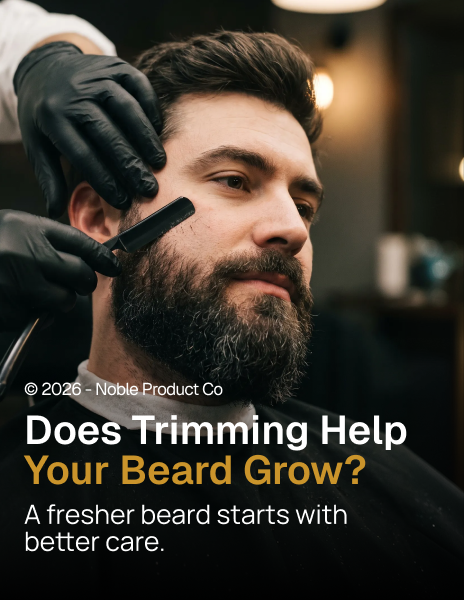
Does Trimming Help Your Beard Grow?
No. Trimming doesn't make your beard grow faster, thicker, or fuller. Hair growth happens at the follicle under your skin, and cutting the ends has no effect on what the follicle does. What a good trim really does is clean up split ends and shape the beard so the hair you already have looks healthier and more even.
Why do people think trimming makes a beard grow faster?
It's one of the oldest grooming myths around, and it sticks because a fresh trim can make a beard look better almost right away. Tidy up the stragglers and even out the edges, and suddenly the whole beard reads as fuller and more deliberate. That visual upgrade gets remembered as growth. The hair itself didn't grow any faster. It just got a cleaner shape.
What does trimming actually do for your beard?
Plenty, just not what the myth claims. Trimming removes split ends before they travel up the strand and cause breakage. It evens out the hairs that grow faster than the rest, so your beard looks uniform instead of scraggly. And it lets you shape the neckline and cheek line so the beard frames your face the way you want. A beard that's shaped and free of damaged ends looks thicker, even though the follicle count never changed.
Should you trim a new beard or let it grow?
If you're trying to reach a longer length, hold off on heavy trimming for the first two to three months and let the beard fill in. Early on it can look patchy and uneven, and that's normal. Once it has some length, light shaping keeps it looking intentional rather than wild. The exception is your neckline, which is worth cleaning up early so the beard looks groomed while it grows.
How often should you trim your beard?
For most guys, every two to four weeks is enough to keep splits and stray hairs in check without cutting into your length. If you're growing out, trim less. If you're holding a set style, trim a little more often. Between trims, keep the beard conditioned so the ends don't dry out and split in the first place. A few drops of beard oil worked through daily keeps the hair soft and less prone to the breakage that makes a beard look thin.
What actually affects beard growth?
Growth rate, thickness, and how much of your face fills in come down to genetics, hormones, age, and general health. Sleep, diet, and stress play a role in overall hair health, but no product or grooming habit adds new follicles or grows hair where you don't have any. What you can control is the condition of the beard you've got. Keep the skin underneath healthy and the hair well cared for, and your beard will look its best at whatever length it reaches. A simple routine built around a good beard care system handles most of that.

Leave a comment
This site is protected by hCaptcha and the hCaptcha Privacy Policy and Terms of Service apply.